
Introduction
Your washing machine works hard to keep your clothes fresh and clean, but one component that often gets ignored is the detergent tray. Over time, detergent residue, fabric softener buildup, hard water deposits and moisture create the perfect environment for mold, mildew and bacteria.
A dirty detergent tray not only causes unpleasant odors but also affects detergent distribution and washing performance. The good news is that you can easily perform a DIY Detergent Tray Deep Clean at home using simple household items.
In this complete guide, you'll learn how to clean a detergent drawer, why regular maintenance matters, common mistakes to avoid and when it's time to call professionals like Sajilo Sewa for washing machine servicing.
What Is a Detergent Tray?
A detergent tray (also called a detergent drawer or dispenser) is the compartment where detergent, fabric softener and pre-wash liquid are added before starting a wash cycle.
It automatically releases the appropriate cleaning solution during different stages of the wash cycle, ensuring clothes are cleaned effectively.
Without proper maintenance, detergent residue accumulates inside the tray and internal channels, reducing its efficiency.
Why Is Detergent Tray Cleaning Important?
Regular Detergent Tray Cleaning improves both hygiene and washing machine performance.
Prevents Mold and Mildew
Constant moisture inside the detergent drawer creates an ideal environment for black mold and mildew growth.
Benefits
Prevents black spots
Reduces bacteria buildup
Improves laundry hygiene
Eliminates unpleasant odors
Improves Washing Performance
When detergent residue blocks the dispenser, detergent may not dissolve properly.
Benefits
Better detergent distribution
Cleaner clothes
Better stain removal
Reduced detergent waste
Extends Washing Machine Lifespan
A clean detergent drawer prevents residue from entering internal components and causing unnecessary wear.
Benefits
Better machine efficiency
Less maintenance
Fewer service calls
Longer appliance lifespan
Common Problems Found in Washing Machine Detergent Trays
Detergent Residue Build-up
Excess detergent sticks to the drawer walls and gradually hardens.
Signs
White powder deposits
Sticky surfaces
Blocked dispenser holes
Mold Growth
Moisture trapped after every wash cycle encourages mold formation.
Signs
Black spots
Green patches
Musty smell
Fabric Softener Residue
Fabric softeners are thicker than detergents and leave behind waxy deposits.
Signs
Slimy texture
Sticky compartments
Poor softener dispensing
Hard Water Deposits
Minerals present in water accumulate over time.
Signs
White scaling
Rough texture
Reduced water flow
Signs Your Detergent Drawer Needs a Deep Clean
If you notice any of these issues, it's time for a Deep Clean Washing Machine Drawer routine.
Bad Odor
A foul smell coming from the washing machine is often caused by mold inside the detergent tray.
Black Spots
Visible black mold indicates bacterial growth that requires immediate cleaning.
Detergent Left After Every Wash
If detergent remains inside the drawer after a cycle, residue may be blocking the water channels.
Clothes Don't Smell Fresh
Poor detergent distribution reduces cleaning performance.
Visible Dirt or Slime
Sticky residue is a clear sign that the tray needs cleaning.
DIY Detergent Tray Deep Clean: Step-by-Step Guide
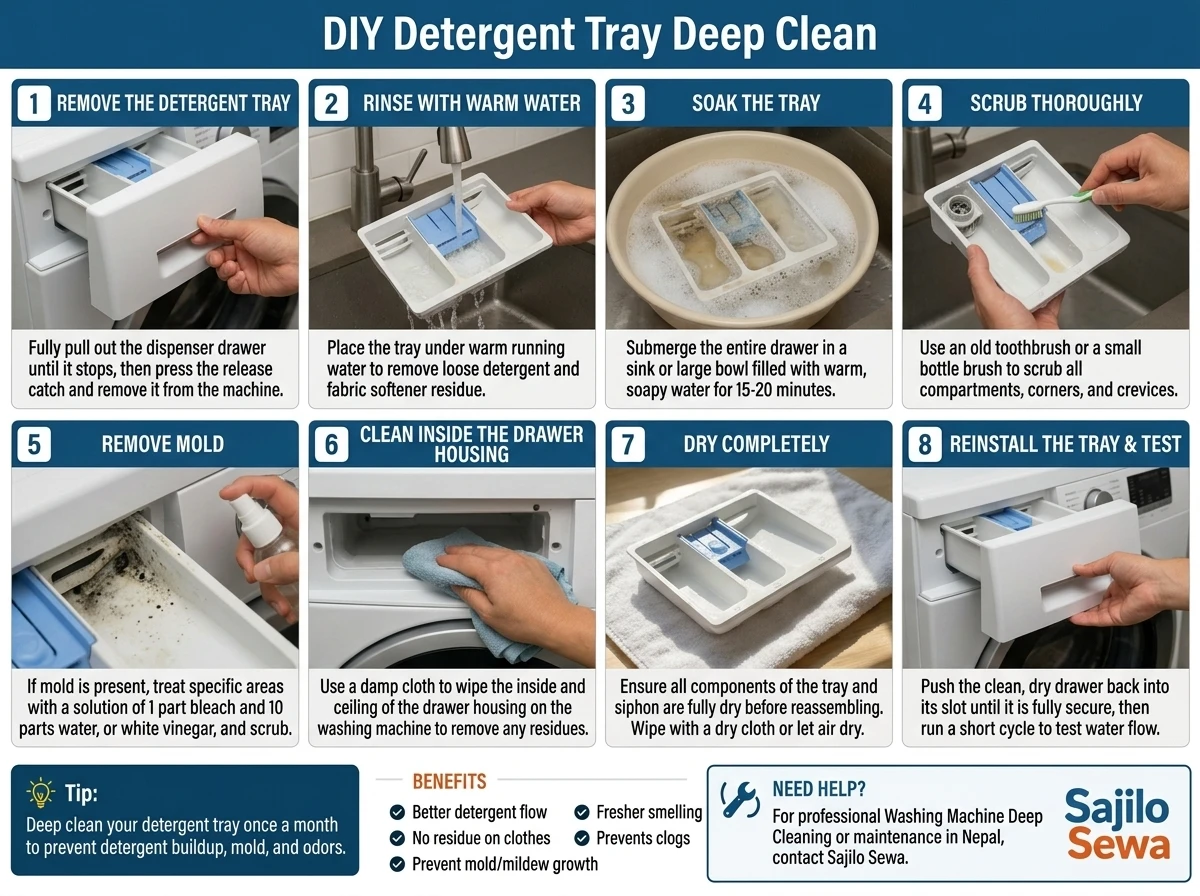
Step 1 – Remove the Detergent Tray
Most front-load washing machines have a release button inside the drawer.
Gently press the release mechanism and pull the tray completely out.
Step 2 – Rinse with Warm Water
Rinse the tray under running warm water to remove loose detergent and fabric softener residue.
Avoid using boiling water on plastic trays.
Step 3 – Soak the Tray
Prepare a solution using:
Warm water
White vinegar
Mild dish soap
Soak the tray for 20–30 minutes to loosen hardened residue.
Step 4 – Scrub Thoroughly
Use:
Soft brush
Old toothbrush
Microfiber cloth
Pay special attention to:
Corners
Detergent compartments
Water holes
Hidden grooves
Step 5 – Remove Mold
If mold is present:
Apply vinegar directly
Let it sit for 10 minutes
Scrub gently
Avoid mixing vinegar with bleach.
Step 6 – Clean Inside the Drawer Housing
Many people clean only the tray and forget the dispenser cavity.
Use:
Damp cloth
Soft brush
Cotton swabs
Remove detergent residue from inside the machine.
Step 7 – Dry Completely
Allow both the tray and housing to dry before reinstalling.
Proper drying helps prevent future mold growth.
Best Cleaning Materials for Detergent Tray Cleaning
White Vinegar
Natural cleaning solution that dissolves mineral deposits and eliminates odors.
Advantages
Affordable
Eco-friendly
Antibacterial
Mild Dish Soap
Removes grease and detergent buildup effectively.
Advantages
Safe for plastic
Easy to rinse
Gentle cleaning
Baking Soda
Useful for deodorizing and removing stubborn stains.
Advantages
Neutralizes odors
Mild abrasive action
Safe for household cleaning
Mistakes to Avoid During DIY Detergent Tray Deep Clean
Using Sharp Objects
Metal tools can scratch plastic surfaces and create spaces for bacteria accumulation.
Using Excess Bleach
Strong chemicals may damage plastic components and rubber seals.
Forgetting Internal Compartments
Cleaning only the removable tray leaves hidden mold inside the dispenser housing.
Not Drying the Tray
Leaving moisture behind encourages mold to return quickly.
Washing Machine Maintenance Tips
Proper Washing Machine Maintenance goes beyond detergent tray cleaning.
Leave the Door Open
After every wash, leave the machine door slightly open to improve ventilation.
Wipe Rubber Gaskets
Front-load washing machines collect moisture around door seals.
Regular wiping prevents mold buildup.
Run a Monthly Drum Clean Cycle
Use a washing machine cleaner or hot water cycle once every month.
Use the Correct Amount of Detergent
Too much detergent creates unnecessary residue.
Always follow manufacturer recommendations.
Clean the Filter Regularly
A blocked filter reduces drainage efficiency and causes unpleasant smells.
When DIY Cleaning Isn't Enough
Professional servicing is recommended if:
Mold keeps returning
Water doesn't enter the detergent drawer properly
Detergent remains after every wash
The machine produces bad odors despite cleaning
Internal dispenser pipes are blocked
These problems may require partial disassembly and professional inspection.
Why Choose Sajilo Sewa for Washing Machine Servicing?
Sajilo Sewa provides reliable home appliance solutions across Nepal with experienced technicians.
Washing Machine Servicing
Complete inspection and maintenance for front-load and top-load washing machines.
Deep Internal Cleaning
Professional cleaning removes hidden detergent residue, mold and internal blockages.
Washing Machine Repair
Diagnosis and repair of dispenser problems, drainage issues and performance faults.
Preventive Maintenance
Regular servicing helps improve washing efficiency and extends appliance lifespan.
FAQs
1. How often should I perform detergent tray cleaning?
Ideally once every month or every two weeks if you use your washing machine frequently.
2. Why does black mold grow inside the detergent tray?
Moisture, detergent residue and poor ventilation create the perfect environment for mold growth.
3. Can I clean the detergent tray with vinegar?
Yes. White vinegar is effective for removing mineral deposits, mold and unpleasant odors.
4. Is baking soda safe for detergent tray cleaning?
Yes. Baking soda helps remove stains and neutralize odors without damaging plastic surfaces.
5. Why is detergent left inside the drawer after washing?
Blocked water channels or detergent residue buildup are the most common causes.
6. Can a dirty detergent tray affect washing performance?
Yes. Poor detergent dispensing can result in dirty clothes and detergent stains.
7. Should I leave the detergent drawer open after washing?
Yes. Leaving it slightly open allows moisture to evaporate and prevents mold growth.
8. Can mold inside the detergent tray damage clothes?
Yes. Mold spores and bacteria may transfer unpleasant odors to freshly washed clothes.
9. How long does a DIY detergent tray deep clean take?
A complete deep clean usually takes around 30–45 minutes, including soaking and drying.
10. Does Sajilo Sewa provide washing machine servicing in Nepal?
Final Thoughts
Regular DIY Detergent Tray Deep Clean is one of the easiest ways to improve washing machine hygiene, eliminate mold and ensure better laundry results. Spending just a few minutes each month cleaning your washing machine detergent tray can prevent costly repairs, reduce bad odors and extend the life of your appliance.
However, if you notice recurring mold, blocked dispensers or reduced washing performance, professional servicing is the smarter long-term solution. Sajilo Sewa provides expert washing machine maintenance and repair services to help keep your appliances running efficiently throughout the year.