
Introduction
A washing machine not draining is one of the most common household appliance problems. After the wash cycle finishes, you open the door only to find clothes soaking in dirty water. This issue can interrupt your daily routine and, if ignored, may lead to unpleasant odors, mold growth and even costly repairs.
The good news is that many washing machine drainage problems can be solved at home with a few simple checks. In this guide, you'll learn why your washing machine won't drain, step-by-step troubleshooting methods, preventive maintenance tips and when it's time to call a professional technician.
Whether you own a top-load or front-load washing machine, this guide will help you restore your appliance quickly and safely.
Why Is My Washing Machine Not Draining?
There are several reasons why a washing machine not draining water issue occurs. Identifying the cause is the first step toward fixing it.
Common causes include:
Clogged drain filter
Blocked drain hose
Faulty drain pump
Overloaded washing machine
Kinked or bent drain hose
Electrical or control board problems
Foreign objects like coins, socks or hairpins blocking the pump
Fortunately, most of these issues can be diagnosed without specialized tools.
Signs of a Washing Machine Drainage Problem
If you notice any of the following symptoms, your washing machine may have a drainage issue:
Water remains inside after the wash cycle
Clothes come out soaking wet
The spin cycle does not start
The machine stops mid-cycle
Strange humming or grinding noises
Error codes related to drainage
Bad smell coming from the machine
Ignoring these warning signs can damage internal components and reduce your washing machine's lifespan.
Safety Tips Before You Start
Before attempting any repairs:
Turn off the washing machine.
Unplug it from the power source.
Close the water supply if necessary.
Keep towels or a bucket nearby to catch excess water.
Wear protective gloves when cleaning filters or pumps.
Safety should always be your first priority.
How to Fix Washing Machine Not Draining
Step 1: Check the Drain Hose
The drain hose carries wastewater from the machine to the drain.
Look for:
Kinks or bends
Blockages
Loose connections
Straighten any bends and disconnect the hose if necessary. Flush it with clean water to remove dirt or debris.
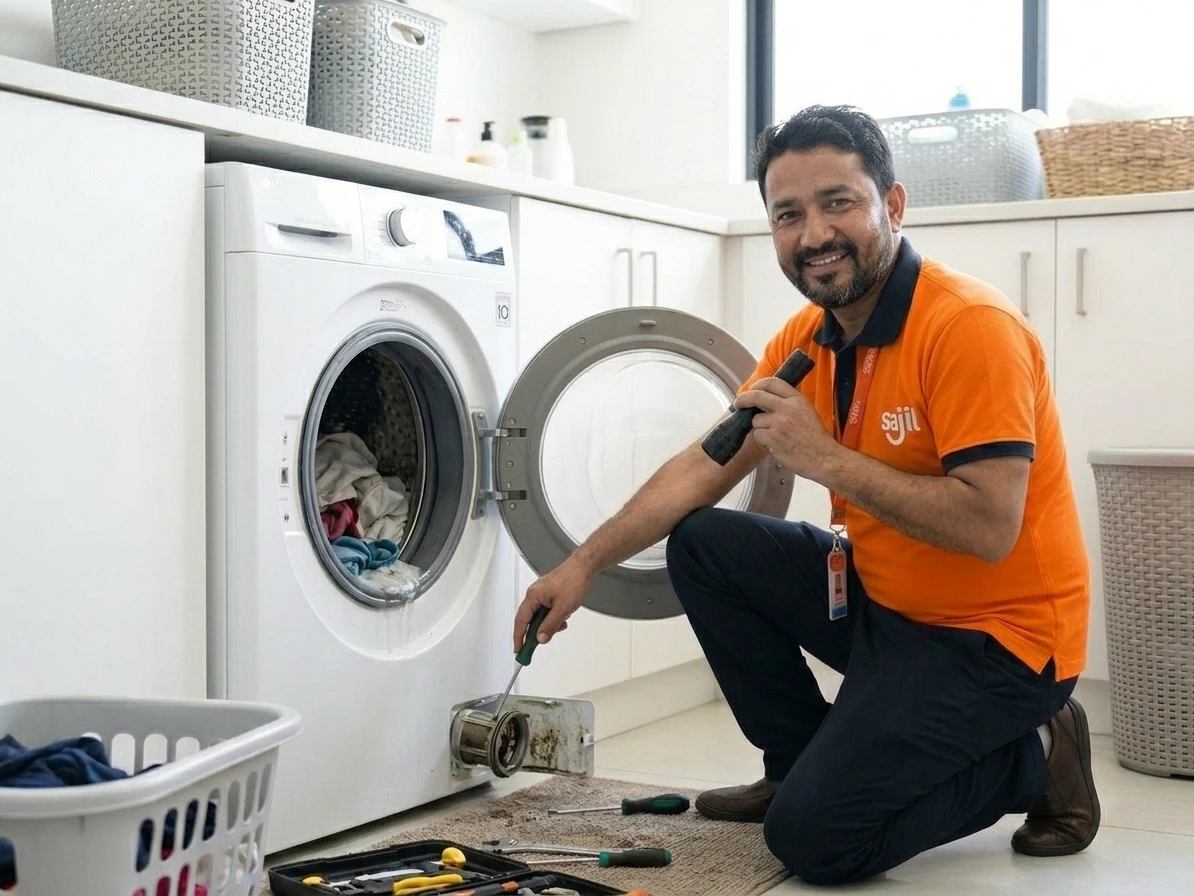
Step 2: Clean the Drain Filter
A clogged drain filter is one of the most common reasons a washing machine won't drain.
How to clean it:
Locate the filter panel.
Place a towel underneath.
Slowly open the filter cap.
Allow remaining water to drain.
Remove lint, coins, hair and debris.
Wash the filter thoroughly.
Reinstall securely.
Cleaning the filter every month helps prevent drainage problems.
Step 3: Inspect the Drain Pump
If the filter is clean but water still won't drain, inspect the drain pump.
Signs of a faulty pump include:
Loud grinding noises
Humming without draining
Water remaining after every cycle
Small objects like buttons or socks may block the pump impeller.
If damaged, the pump should be replaced by a qualified technician.
Step 4: Reduce the Laundry Load
Overloading prevents proper water circulation and drainage.
Always follow the manufacturer's recommended load capacity.
Signs of overloading:
Clothes packed tightly
Machine vibrating excessively
Poor washing performance
Water remaining after spin cycle
Step 4: Check for Error Codes
Modern washing machines display error codes when drainage problems occur.
Refer to your user manual to identify the meaning of the code.
Many drainage errors simply indicate:
Blocked filter
Blocked drain hose
Pump malfunction
Resetting the machine after cleaning often solves the issue.
Common Mistakes to Avoid
Many homeowners accidentally make the problem worse.
Avoid these mistakes:
❌ Using excessive detergent
❌ Ignoring small drainage delays
❌ Pulling the drain hose forcefully
❌ Running multiple cycles without fixing the issue
❌ Opening the filter quickly without draining water
❌ Continuing to use the machine while clogged
Preventive Maintenance Tips
Regular maintenance reduces the chances of a washing machine drainage problem.
Follow these simple habits:
Clean the filter monthly
Remove lint, coins and dirt before they build up.
Inspect the drain hose every few months
Check for cracks, bends or clogs.
Use the correct detergent
High-efficiency machines require HE detergent to reduce soap buildup.
Avoid overloading
Balanced loads improve washing performance and drainage.
Run a cleaning cycle monthly
Use a washing machine cleaner or vinegar solution to remove residue and odors.
When Should You Call a Professional?
DIY fixes work for simple blockages, but professional repair is recommended when:
Water still won't drain after cleaning
Drain pump is damaged
Burning smell comes from the machine
Electrical issues appear
Error codes continue to display
Water leaks from underneath
Professional technicians can diagnose the problem safely and prevent expensive damage.
Why Choose Sajilo Sewa for Washing Machine Repair?
If your washing machine not draining water problem cannot be solved at home, Sajilo Sewa provides reliable appliance repair services across Kathmandu Valley.
Why homeowners trust Sajilo Sewa:
Experienced appliance technicians
Quick doorstep service
Genuine spare parts
Transparent pricing
Professional diagnosis
30-day service warranty
Convenient online booking
Whether it's a clogged drain pump, faulty motor or complete drainage failure, our experts are ready to help.
FAQs
1. Why is my washing machine not draining after the wash cycle?
The most common causes are a clogged drain filter, blocked drain hose or faulty drain pump.
2. Can I use my washing machine if it won't drain?
No. Continuing to use it may damage the pump and other internal components.
3. How often should I clean the drain filter?
Once every month or after every 30 wash cycles.
4. Why is my washing machine making noise but not draining?
This usually indicates a blocked or damaged drain pump.
5. Can too much detergent cause drainage problems?
Yes. Excess detergent creates residue that can clog filters and hoses.
6. Why are my clothes still wet after spinning?
The machine may not be draining properly, preventing the spin cycle from working efficiently.
7. How long does it take to fix a washing machine drainage problem?
Simple blockages can be fixed within 15–30 minutes, while pump replacement may take 1–2 hours.
8. Is a blocked drain hose easy to clean?
Yes. Disconnect it carefully and flush it with clean water to remove debris.
9. Should I replace the drain pump myself?
Unless you have appliance repair experience, professional replacement is recommended.
10. Who provides professional washing machine repair in Kathmandu?
Final Words
A washing machine not draining doesn't always mean you need a new appliance. In many cases, cleaning the drain filter, inspecting the drain hose or removing a blockage can restore normal operation within minutes.
Regular maintenance and proper usage are the best ways to prevent future drainage problems. However, if the issue persists or involves electrical components, it's safer to seek professional assistance.