

Introduction
Have you ever taken freshly washed clothes out of the washing machine only to notice white marks on clothes, powdery streaks, or chalky patches? It can be frustrating, especially when your clothes looked clean before washing.
In most cases, these white stains are not caused by the fabric itself but by detergent residue, hard water minerals, overloaded washing machines, or poor maintenance. Fortunately, these issues are easy to identify and fix with proper laundry habits and regular appliance care.
In this guide, we'll explain why white marks on clothes appear, the most common causes, practical solutions, and preventive maintenance tips to keep your laundry fresh and spotless. We'll also discuss when it's time to call a professional washing machine technician.
Why Do White Marks on Clothes Appear After Washing?
A washing machine should remove dirt, not leave stains behind. However, when detergent does not dissolve properly or minerals build up inside the machine, they can stick to fabric and create visible white streaks.
Common reasons include:
Excess detergent usage
Hard water minerals
Dirty detergent drawer
Overloaded washing machine
Clogged filters
Fabric softener residue
Low water temperature
Lack of washing machine maintenance
Understanding the exact cause helps you solve the problem quickly and avoid repeated laundry issues.
8 Common Causes of White Marks on Clothes
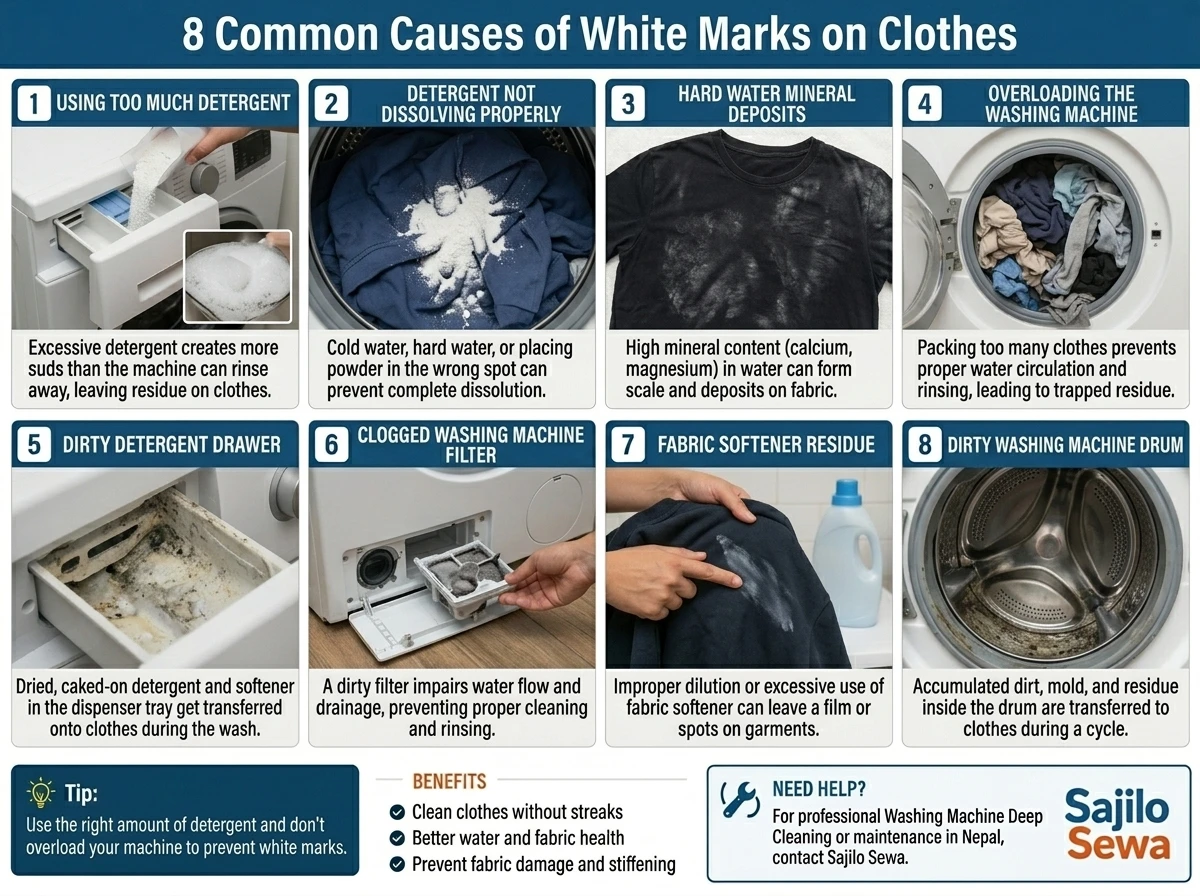
1. Using Too Much Detergent
One of the biggest reasons for white marks on clothes is using more detergent than necessary.
Many people assume extra detergent means cleaner clothes, but the opposite is often true. Excess detergent creates too many suds, making it difficult for the machine to rinse everything away.
Signs
White streaks on dark clothes
Powder residue after washing
Sticky or rough fabric texture
Soap buildup inside the drum
Solution
Follow the detergent manufacturer's recommended dosage.
Adjust detergent quantity based on load size.
Use High-Efficiency (HE) detergent for compatible washing machines.
2. Detergent Not Dissolving Properly
Powder detergent may not dissolve completely when washing with cold water or during short wash cycles.
Undissolved detergent particles stick directly to fabrics and appear as white patches after drying.
Signs
Powder-like residue
White spots concentrated in one area
Visible detergent granules
Solution
Dissolve powder detergent before adding it.
Use liquid detergent for cold washes.
Select a longer wash cycle when needed.
3. Hard Water Mineral Deposits
Hard water contains calcium and magnesium minerals that react with detergent and create white residue on clothing.
This problem becomes more noticeable over time as minerals accumulate inside the washing machine.
Symptoms
Clothes feel stiff
White chalky marks
Reduced cleaning performance
Solution
Use a water softener.
Add laundry boosters designed for hard water.
Descale the washing machine regularly.
4. Overloading the Washing Machine
When the drum is packed with too many clothes, water and detergent cannot circulate properly.
As a result, detergent remains trapped inside fabrics and leaves white marks after drying.
Signs
Uneven cleaning
Detergent residue
Clothes tangled together
Solution
Fill the drum only up to 75–80% capacity.
Wash bulky items separately.
Allow enough space for clothes to move freely.
5. Dirty Detergent Drawer
Over time, detergent and fabric softener build up inside the detergent drawer.
Old residue mixes with fresh detergent and gets transferred back onto your clothes.
Warning Signs
Mold inside the drawer
Sticky detergent buildup
White residue on laundry
Solution
Remove and clean the detergent tray every month.
Use warm water and a soft brush.
Dry completely before reinstalling.
6. Clogged Washing Machine Filter
The drain filter collects lint, dirt, hair, and small debris.
If it becomes blocked, dirty water may circulate back into the drum, leaving residue on clothes.
Symptoms
Poor rinsing
White particles on fabric
Slow drainage
Solution
Clean the filter every one to three months.
Remove lint and debris carefully.
Check for trapped objects like coins or buttons.
7. Fabric Softener Residue
Using too much fabric softener or pouring it directly onto clothes can create waxy white stains.
Concentrated softener does not rinse away properly and sticks to fabric fibers.
Signs
White or bluish marks
Oily-looking patches
Strong softener smell
Solution
Use the recommended amount.
Never pour softener directly onto clothes.
Clean the softener compartment regularly.
8. Dirty Washing Machine Drum
Even if your clothes look dirty, your washing machine also needs regular cleaning.
Detergent residue, lint, body oils, and mineral deposits accumulate inside the drum and eventually transfer onto clothing.
Symptoms
White residue
Musty smell
Poor washing performance
Solution
Run an empty hot-water cleaning cycle every month.
Use a washing machine cleaner or vinegar solution.
Leave the door open after washing to allow drying.
How to Remove White Marks from Clothes
If your clothes already have white marks, don't panic.
Follow these simple steps:
Shake off loose detergent residue.
Rewash clothes without adding extra detergent.
Use warm water if the fabric allows.
Add an extra rinse cycle.
Brush away remaining powder after drying.
For hard water stains, soak clothes in a mild vinegar solution before rewashing.
Most detergent-related white stains disappear after a proper rinse cycle.
How to Prevent White Marks on Clothes
Regular washing machine maintenance and proper laundry habits can prevent residue from appearing.
Best Practices
Measure detergent correctly.
Avoid overloading the washer.
Clean the detergent drawer monthly.
Clean the drain filter regularly.
Run a drum cleaning cycle every month.
Use water softener if you live in a hard water area.
Leave the washing machine door open after every wash.
Schedule professional washing machine servicing once a year.
When Should You Call a Professional Washing Machine Technician?
If white marks continue appearing even after cleaning your washing machine and adjusting detergent usage, the appliance may have an internal problem.
Professional technicians can inspect:
Drum condition
Water inlet system
Drainage system
Internal detergent buildup
Pump performance
Mechanical components
At Sajilo Sewa, our experienced appliance repair technicians diagnose washing machine problems quickly and provide reliable servicing to restore optimal washing performance. Regular maintenance not only improves cleaning results but also extends the lifespan of your appliance.
FAQs
1. Why do white marks appear on clothes after washing?
White marks are usually caused by detergent residue, hard water minerals or improper rinsing.
2. Can too much detergent leave white stains on clothes?
Yes. Excess detergent often fails to rinse completely and leaves visible white streaks.
3. Does hard water cause white residue on clothes?
Yes. Calcium and magnesium minerals in hard water can react with detergent and create white deposits.
4. How do I remove white detergent marks from clothes?
Rewash the clothes without additional detergent and use an extra rinse cycle.
5. Can an overloaded washing machine cause white marks?
Yes. Overloading prevents proper water circulation and detergent removal.
6. Why do dark clothes show white streaks more often?
Detergent residue is more visible on dark fabrics than on light-colored clothing.
7. How often should I clean my washing machine?
Cleaning the drum and detergent drawer once a month is recommended for optimal performance.
8. Is liquid detergent better than powder detergent?
For cold water washing, liquid detergent generally dissolves better and reduces residue.
9. Can a dirty detergent drawer cause white stains?
Yes. Old detergent buildup can mix with fresh detergent and transfer onto clothes.
10. Should I use fabric softener if my clothes have white marks?
Use fabric softener in moderation and only in the designated compartment to avoid additional residue.
11. Can white marks damage clothes permanently?
Most detergent and mineral residues are removable if treated promptly with proper washing techniques.
12. When should I call a washing machine repair technician?
If white marks continue after cleaning the machine and adjusting detergent usage, professional servicing is recommended to inspect for internal faults.
Final Words
Seeing white marks on clothes after washing is a common household problem, but it's usually easy to fix. Excess detergent, hard water minerals, overloaded drums, dirty filters and poor washing machine maintenance are the most frequent causes.
By using the correct amount of detergent, cleaning your washing machine regularly and following proper laundry practices, you can keep your clothes looking fresh and residue-free.
If the problem persists despite regular cleaning, professional inspection can identify hidden mechanical issues before they become costly repairs.